

Lately, I’ve been having a lot of conversations with business owners, and I keep hearing the same thing:
“Most of our business comes from word of mouth.”
Every time I hear it, my first thought is: that’s a good thing.
If customers are willing to put their own reputation on the line to recommend you to a friend, a neighbor, or another business owner, you’ve earned something you can’t buy with an ad.
You’ve earned trust.
But there’s a difference between having a great reputation and getting the full value out of the one you’ve built.
Word of Mouth Has Changed
Twenty years ago, a referral might have gone something like this:
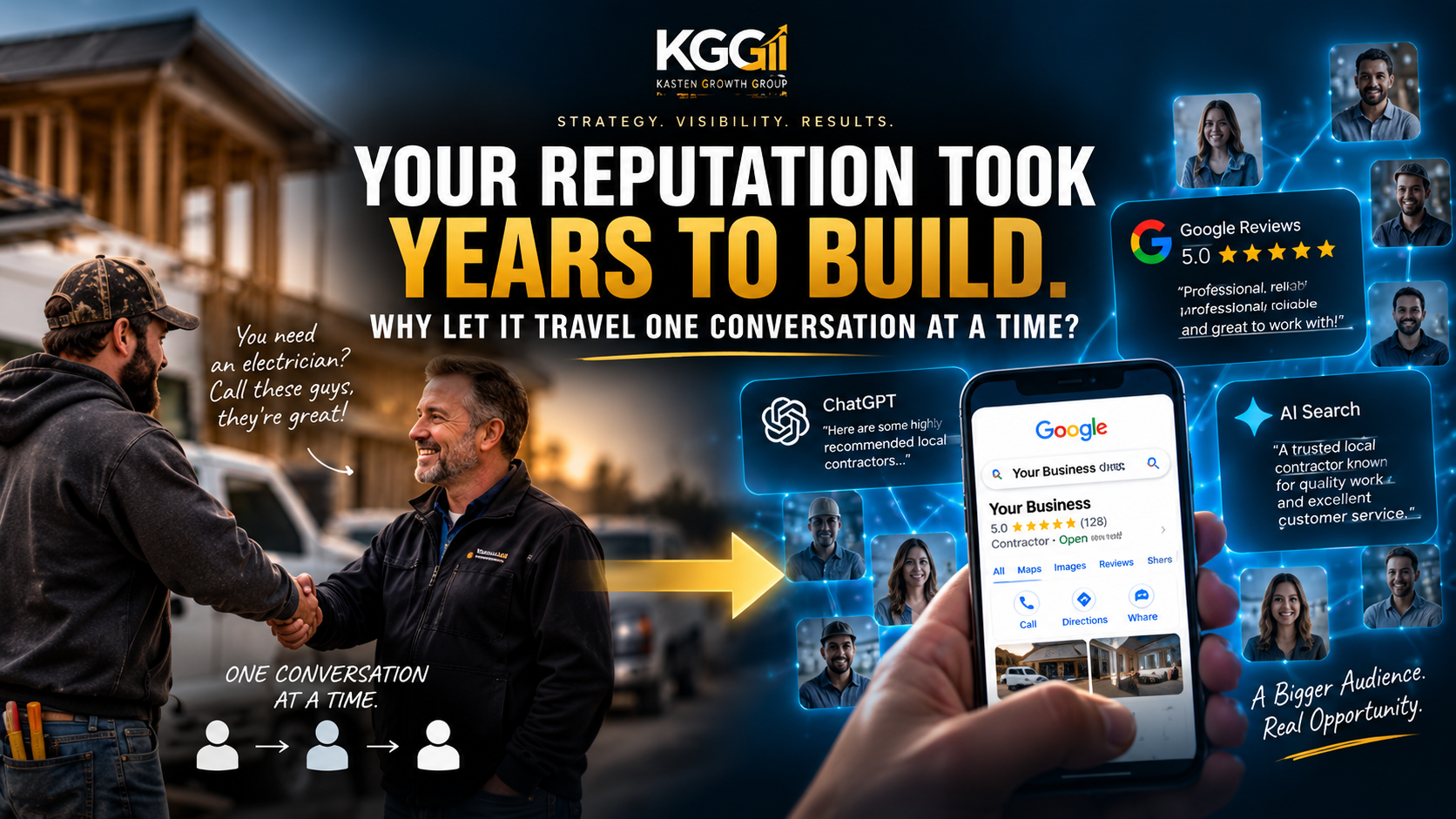
“You need an electrician? Call these guys, they’re great.”
The person wrote down the number and made the call.
Today, that conversation still happens — but it’s rarely the last step anymore.
Before they call, they Google you, check your reviews, and take a look at your website and your project photos. Some of them compare you to the company down the road. And a growing number are asking ChatGPT, Gemini, or another AI platform what it knows about your business before they ever pick up the phone.
The referral gets your name into the conversation. What happens after that is up to your digital presence.
That’s really the whole point of this article: word of mouth and digital marketing aren’t two competing strategies.
Done right, one amplifies the other.
The Disconnect I See Constantly
Here’s where I see the gap, over and over, with businesses that have been around for decades.
Picture a contractor who’s been in business over 20 years — a few crews, a loyal customer base, more work than he can always keep up with. Ask around and everyone in town knows his name.
Search for him online, though, and you’d barely know he exists.
The website hasn’t been touched since a nephew built it years ago. There are a handful of reviews, if any. Someone who hasn’t gotten the referral yet — who’s just found him through a search — has almost nothing to go on.
That’s the disconnect. Tremendous credibility in the real world, almost none of it visible online.
Those two things should reinforce each other, and for most established businesses, they don’t.
What This Actually Means for You
If your business has grown mainly through referrals, you’ve already done the hard part.
You’ve spent years — sometimes decades — building relationships, doing good work, and earning people’s trust.
Digital growth isn’t about walking away from that and replacing it with ads or some new piece of software.
It’s about giving the reputation you’ve already earned a bigger audience.
Your reviews become digital word of mouth.
Your website tells your story on the days you’re not in the room to tell it yourself.
Your project photos do the talking your work already does in person.
And increasingly, AI platforms can introduce your company to people who’ve never heard your name — the way a friend or neighbor used to.
Your reputation stops traveling one conversation at a time. It starts working around the clock.
Build On It, Don’t Replace It
I’d never tell a business owner to stop relying on referrals — I’d tell them to build on them.
The goal isn’t inventing some polished, artificial version of your company online. It’s making sure the business people find when they search for you actually looks like the business your customers already know and recommend.
If you’ve spent decades becoming one of the best at what you do, people shouldn’t have to already know one of your customers to find that out.
Your reputation took years to build. It’s time to let it travel further than one conversation at a time.
— RJ Kasten Founder, Kasten Growth Group